Flexible and on the move
In prehistoric times, exercise was a fixed and logical part of the daily program of humans. Walking, running, crawling, lifting and after the hunt probably walking kilometers with the catch of the day back to the camp where the women and children stayed.
How different the lives of most of us look now, while from a genetic point of view we are not even that different from that prehistoric man. It can now be assumed that too little exercise is bad for our health. What you probably don’t know is that sitting still itself has very bad effects on your body. For example, a study with a number of healthy, young people showed that sitting still for a day already has significant, adverse effects on metabolism. These unfavorable effects also turned out not to be compensated for with an hour of exercise. Even at a later age, continuing to walk and exercise is not only good for mobility, but it also keeps the aging brain active and in shape.

Bones
Our skeleton (the set of bones and bones in our body) allows us to resist gravity and move. The human skeleton has 206 bones and provides support to our body. The skeleton also protects vulnerable parts (e.g. brain, heart and lungs), produces red and white blood cells in the bone marrow and serves as a storage for minerals.
From birth, children’s bones become thicker and longer; there is more bone production than breakdown. In people between the ages of 20 and 30, the bones reach their maximum mass.
Between the ages of 40 and 60, we see that the activity of the osteoblasts (cells that build bone tissue) decreases and the activity of the osteoclasts (cells that break down bone tissue) increases. This is a natural process, by the way. When this process is disrupted, the build-up is too slow and/or the breakdown is too fast. This is called osteoporosis.
Joints
Joints are the flexible connections between our bones that allow them to move relative to each other. In their most basal form, they consist of a joint head and joint socket, separated by a layer of cartilage. Osteoarthritis is a chronic condition of the entire joint in which the amount of cartilage decreases and deteriorates in quality with age. Complaints include pain and stiffness when moving and this condition is more common in women than in men. The most common joint disease is rheumatoid arthritis, an autoimmune disease that causes inflammation in the joints accompanied by swelling and pain with movement.
A selection of the nutrients for the musculoskeletal system
Calcium and magnesium
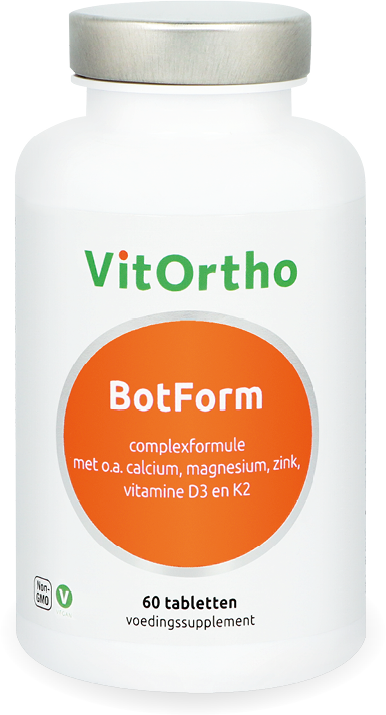
Calcium, like magnesium, is a very important mineral for bone metabolism, as it plays a role in bone formation and is necessary for the maintenance of normal bones. In addition, magnesium is necessary for proper calcium absorption.
Vitamin D
Vitamin D increases the absorption of dietary calcium into the bones. Fatty fish and (to a limited extent) meat and eggs are natural sources of this vitamin, but due to our changed diet, we often no longer get enough vitamin D. Our body can also produce vitamin D itself under the influence of sunlight. In the Netherlands only between the months of May and September, by the way.
Vitamin K
It has been known for some time that vitamin K, and especially K1, contributes to the proper course of blood clotting. In the meantime, all kinds of studies have also made it clear that vitamin K, but especially vitamin K2, is good for the skeleton due to the role this vitamin plays in the absorption of minerals in bone tissue. Vitamin K2 is not or hardly found in the diet, with the exception of butter, cheese, cottage cheese and natto (fermented soybeans). The body can also produce vitamin K itself in the intestines. Newborn babies cannot do this yet, which is why they are given vitamin K after birth.
Manganese
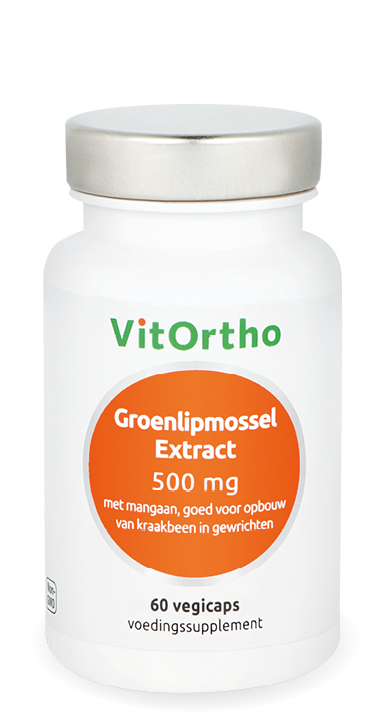
Manganese is a trace element, that is, a mineral that your body only needs small amounts of. Yet manganese plays an important role for our musculoskeletal system because it supports connective tissue, bone formation and the production of cartilage in joints.
Zinc
The trace element zinc is essential for bone composition and the maintenance of strong bones. It plays a role in the functioning of certain cells in the bone matrix: osteoclasts and osteoblasts, which are respectively responsible for the breakdown and construction of bone tissue.
Collagen type II
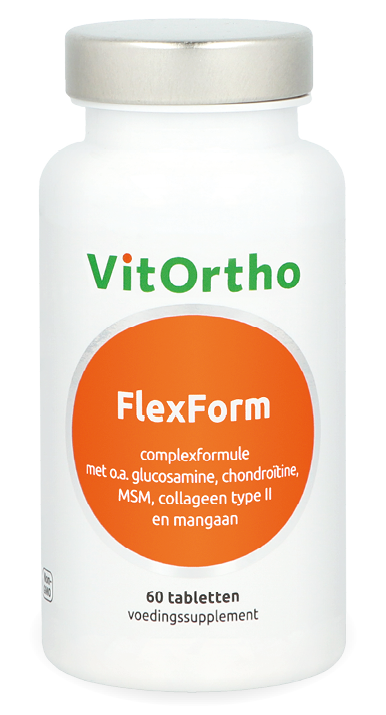
Collagen is the main structural protein in the body’s connective and supporting tissue in humans and animals. In total, there are more than 20 different types of collagen, but types I to IV are by far the most important and abundant in the human body. Type II collagen is an important protein that is mainly found in joints, especially in the knee, elbow, hip, wrist and finger.
Curcuma
Curcuma, also called turmeric, turmeric or turmeric, is a herb derived from the root of the Curcuma longa plant. It is widely used in cooking, due to its flavor and also yellow color. You can also use it to maintain flexible joints.
Boswellia
Boswellia extract is extracted from the resin or gum of the tropical frankincense tree Boswellia serrata that occurs naturally in India. Daily use of 750 mg of boswellia or more helps keep joints supple.
In order to move smoothly, we depend on a well-functioning musculoskeletal system, or the set of bones, skeletal muscles, capsules, cartilage and ligaments that enable us to move. It is therefore important that our musculoskeletal system is in good condition and we can contribute to this ourselves by exercising regularly and also eating healthily so that our body gets the right nutrients. Make sure you have enough relaxation but also enough (physical) exertion. And you don’t always have to go to the gym for that. Taking the stairs more often, working in the garden or dancing to your favorite music, all these things keep us moving.
In addition, supplementing with the right supplements can offer just that extra boost. For example, take a look at the products below. Asking for good advice from an expert is important to make the right choice.